Metal flashing or temporary patches for squirrel damage
When squirrels find their way into an attic, they often leave a trail of chewed soffits, torn fascia boards, and gaps around roof vents. Homeowners in areas with active squirrel populations quickly learn that a single opening can lead to nesting, noise, and odor problems. The usual question is whether to patch the hole with whatever is at hand or to invest in a more permanent fix that keeps the animals out for good. Both approaches have their place, but the choice depends on the location of the damage, the materials involved, and how soon a lasting solution can be arranged.
Temporary patches are exactly what they sound like: quick closures meant to block access until a proper repair can be made. They might involve caulk, foam sealant, or a piece of plywood screwed over the hole. These methods are fast and cheap, and they can stop a squirrel from coming back that same night. The downside is that squirrels are persistent chewers. A patch made from soft wood or standard caulk may only hold for a few days before the animal gnaws through it again. For that reason, temporary fixes work best as a stopgap, not a strategy.
More durable repairs for squirrel openings call for materials that squirrels cannot easily bite through. Metal flashing, heavy-gauge wire mesh, and galvanized steel are the common choices. These materials are installed over the damaged area and fastened with screws or rivets so that they become part of the building surface. A well-done metal repair can last for years and requires little maintenance afterward. The trade-off is that it takes more time, skill, and money to install correctly. Cutting and shaping metal around roofline details such as fascia edges or vent hoods demands careful measurement and the right tools.
When a temporary patch makes sense
There are situations where a quick patch is the right call. If a squirrel has just chewed a hole in a soffit and the weather is about to turn, sealing the opening with a heavy bead of exterior-grade sealant can keep rain and animals out until the weather clears. Similarly, if you are waiting for a professional to schedule a full exclusion, a temporary cover buys you time. The key is to use something that will hold for at least a few days. A piece of hardware cloth screwed over the hole is much better than foam alone, because the wire mesh gives the squirrel something it cannot cut through quickly.
Another scenario is when the damage is on a section of the house that will be replaced soon anyway. If a fascia board is already rotting and you plan to replace it next season, there is little point in installing a custom metal flashing piece now. A temporary plywood patch will keep squirrels out in the meantime, and the whole area will be rebuilt later anyway. Just check the patch every week or two to make sure it has not been loosened.
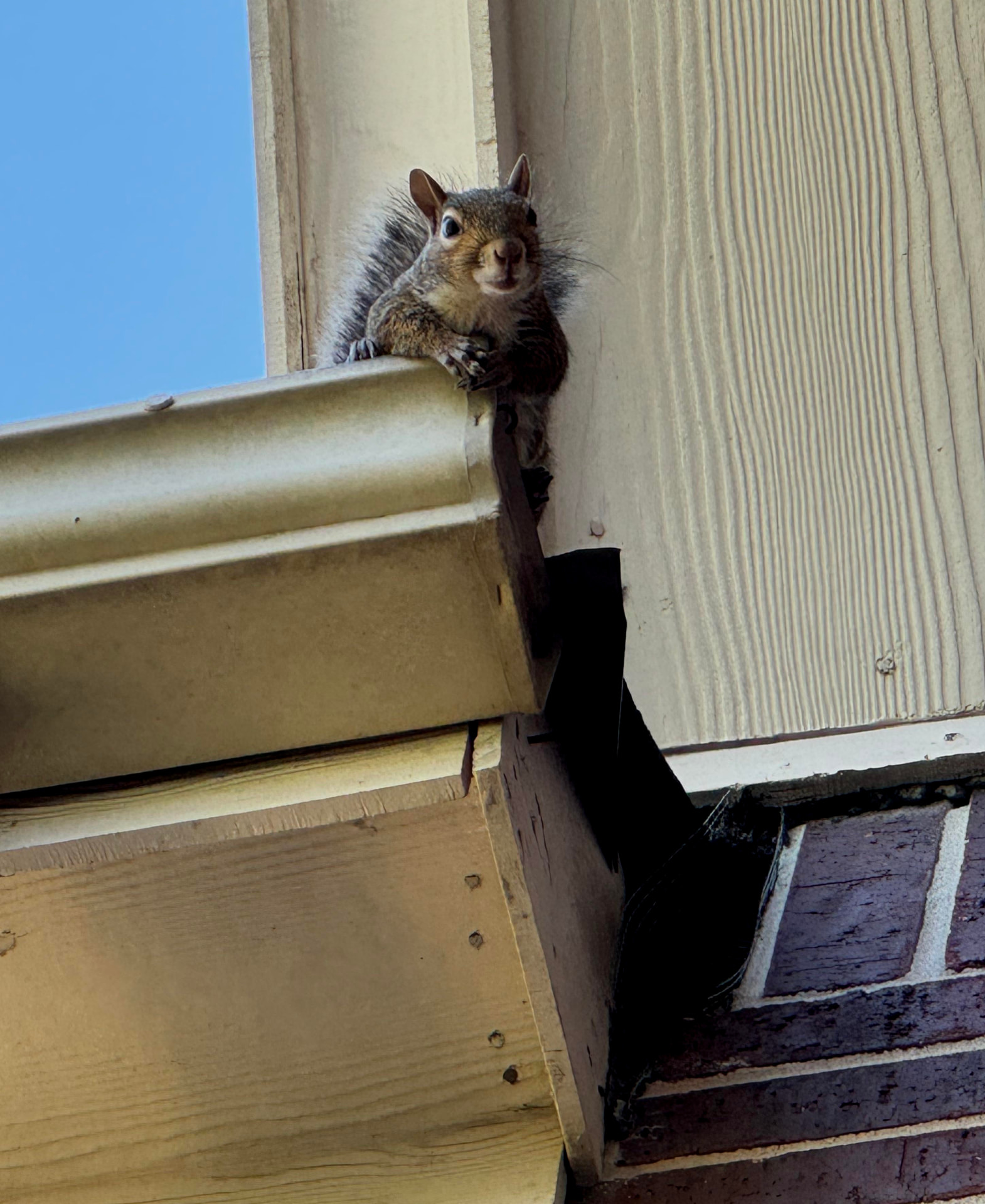
When permanent metal repairs are the better route
For openings around roof vents, chimney chases, and the edges of the roofline, durable repairs for squirrel openings are almost always worth the extra effort. These areas are difficult to reach and tend to be reused by squirrels year after year. A temporary patch on a roof vent will often fail within a season, and by then the squirrel may have chewed a new opening nearby. Metal flashing or heavy-gauge wire mesh installed over the vent opening creates a barrier that the animal cannot work through. The same logic applies to gaps where the fascia meets the roofline. A strip of metal bent to match the profile and fastened with corrosion-resistant screws can close that gap permanently.
Many homeowners worry about the appearance of metal repairs on a visible part of the house. In practice, a careful installation can be nearly invisible. Painted metal flashing that matches the trim color blends in well, and wire mesh can be tucked behind existing trim pieces so that only a close inspection reveals it. The goal is to make the repair look like part of the original construction, not a patch.
Material choices and trade-offs
The most common materials for permanent squirrel exclusion are:
- Galvanized steel flashing for flat surfaces and roofline edges
- Heavy-gauge wire mesh (1/4-inch or smaller) for vents and openings
- Aluminum coil stock for soffit repairs where you need a lightweight, rust-resistant option
- Exterior-grade sealant to seal edges of metal pieces and prevent water intrusion
Each material has its own installation requirements. Steel flashing is strong but requires tin snips or a brake to cut and bend. Wire mesh can be cut with wire cutters and attached with screws and washers, but it needs to be stretched tight so that squirrels cannot push it aside. Aluminum is easier to shape but can dent if hit hard. Choosing the right material for the specific opening makes a big difference in how long the repair holds up.
The role of an exclusion warranty
For homeowners who hire a professional for squirrel exclusion, the work is often backed by an exclusion warranty. This warranty typically covers the sealed entry points for a set period, meaning that if a squirrel reopens a sealed area, the company returns to fix it at no extra charge. The warranty only applies if the repair was done with permanent materials and methods. Temporary patches are rarely covered because they are not expected to last. Knowing this can help you decide whether to handle a repair yourself or call in a pro. If you want the peace of mind that comes with a warranty, the repair needs to meet professional standards from the start.
How to decide which approach fits
Start by inspecting the damage. If the hole is small and on a section of the house that is easy to access, a temporary patch might be enough until you can schedule a full exclusion. If the opening is large, near the roofline, or in an area that has been chewed before, plan for a metal repair. Also consider the age and condition of the surrounding materials. If the soffit or fascia is already degraded, patching it may only delay a bigger problem. In that case, replacing the damaged board and reinforcing the area with metal is a better investment.

Time and budget play a role too. A temporary patch costs almost nothing and can be done in minutes. A metal repair might require a trip to the hardware store, some measuring, and an hour of work. But if the temporary fix fails and you have to redo it, the time and money add up. Many homeowners find that doing the job right the first time saves frustration later.
Finally, think about the long-term squirrel population in your area. If you live in a neighborhood where squirrels are abundant and active, a single permanent repair is more reliable than a series of patches. Squirrels are clever and will test weak points. A metal barrier that they cannot chew through is the only way to stop them for good.
Both temporary patches and permanent metal repairs have their place in squirrel exclusion work. The smart approach is to use patches for short-term needs and to invest in metal repairs for the openings that matter most. That balance keeps your home protected without overcomplicating the job.